
The heartbreak of the Arsenal fixture is over, and Crystal Palace needs goals and wins on the board. In a re-worked format, here is Route to Goal, looking at the areas that could help Crystal Palace overcome Newcastle United on Saturday.
Creating Higher Percentage Chances
The main principle behind xG (expected goals) is that not all shots are equal, despite the total stats tally at the end of a game. The location of that shot, whether it was a header or with the player's weaker foot, all count towards the value an Opta or Statsbomb generates from a Premier League game.
One aspect of this that is easier to understand and visualise is that the closer to the goal you get, the higher the quality of chance is likely to be. We, as fans of football, may dismiss a Raheem Sterling tap in on the back post, but Pep Guardiola is a manager that knows the value of creating high-percentage chances first and foremost.
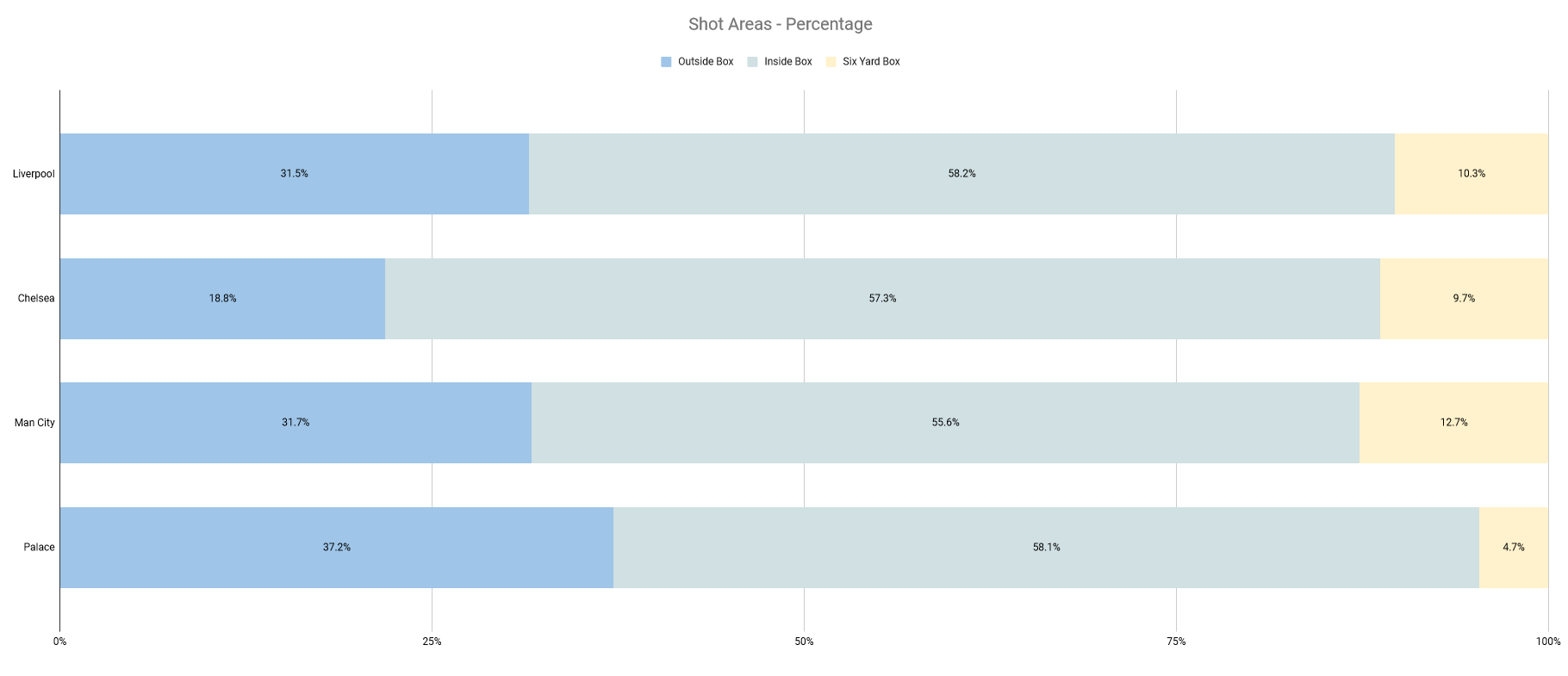
Nobody expects Patrick Vieira to completely replicate what a "Man City" can with a team full of international stars, but focusing on working the ball into dangerous positions could take Palace to the next level. As a benchmark, it's interesting to see where the best sides in the league take their shots, albeit at a far greater volume, as a percentage.
This season is a complete outlier for Man City as they currently have scored ~47% of their goals in the six-yard box. But, in a typical year, they would score ~20% of goals within the six-yard box, from <10% of their total shots in a season. That's a pattern that both Liverpool and Chelsea follow.
It's impressive that the coaching staff has wholly developed the playing style, as the team is showing a much higher quality on the ball in the build-up. But now that the defence can play further up the pitch, to add more support to the midfield in possession, finding a way through the opposition's lines of defence is critical.
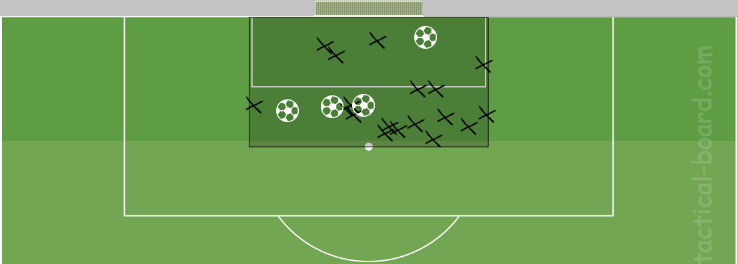
So far this season, Palace has taken 23 shots in open play beyond the penalty spot and within the width of the six-yard area, ~27% of all shots, yielding four goals or 40% of the season's tally. This area is where crosses and through-balls ultimately need to end up, which means improving the team's quality and decision making.
Formation Battle vs Newcastle
So far this season Crystal Palace have faced off against three teams who deployed either a back three (Chelsea/Brentford) or a back three/five hybrid (Brighton).
So far, those encounters haven't seen any goals in open play, with Zaha, the only scorer, from the penalty spot. Palace has been able to threaten more against a flat back four, scoring nine of their ten goals this season.
The question mark in the case of Newcastle, especially with the departure of Steve Bruce as manager, is how the team will line up come Saturday. Newcastle hasn't had any real success with the formations they have used this season. They started with a 3-5-2/5-4-1 using Jacob Murphy, a right wing-back, before starting Javier Manquillo as a more defensive option down the right-hand side for two matches.
After suffering three defeats in their opening five games, Steve Bruce changed to a back four, opting for a more standard 4-3-3 or 4-2-3-1, depending on how you view the more advanced central midfielder.
In their fixture against Leed United, when Bruce used the 3-5-2/5-4-1 formation, Newcastle battled for a draw whilst conceding a lot of possession, more shots on goal, and generally couldn't advance the ball. It took a cross from Raphinha cross/shot to beat Karl Darlow from range, despite giving up several chances to Leeds in the area.
Even with Palace's most attacking starting lineup, in this situation, Newcastle would be happy to concede ground to Palace around the halfway line knowing they could shut them down in and around the penalty area.
To use an Adam Sells favourite, "carrying the ball," or beating a player has never been more critical. By design, the team now looks to probe at a defence rather than playing percentage passes. Getting past a player creates the overload and advantage Patrick Vieira wants.
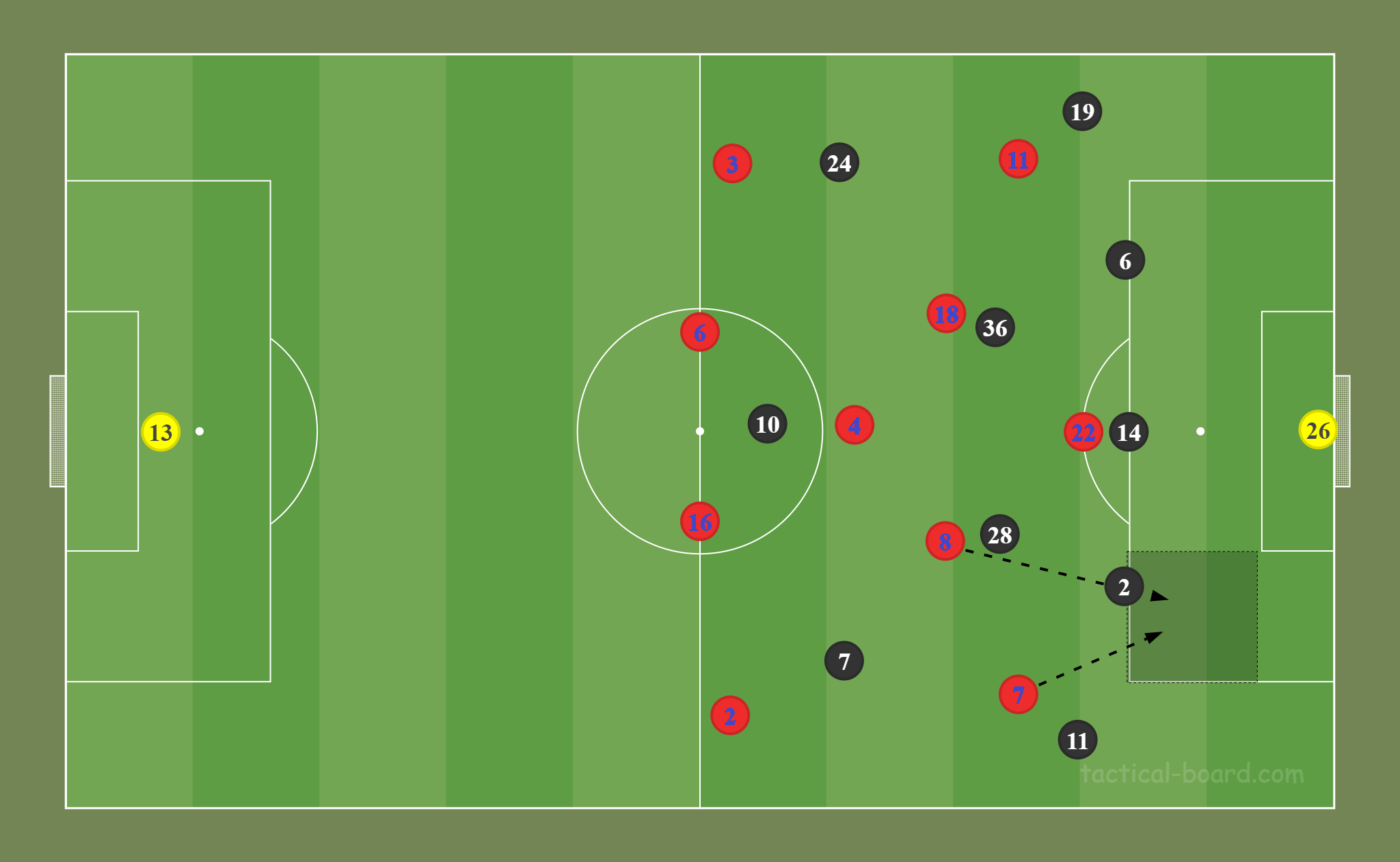
This aggressive dribbling is an area that Palace needs to improve on. Conor Gallagher's run into the box against Brighton drew the penalty to open the scoring in a game where the domination of possession didn't turn into good chances. Much like spells across this season. If Michael Olise finally gets his start this weekend, he will add another direct weapon to attack Newcastle's area. In this part of the pitch, Palace will often face 2-on-3 situations and will need to beat a player.
The high-press against Arsenal was entertaining to watch and led to both Palace goals. Still, it'll be harder to replicate against a team probably just looking to release Allan Saint-Maximin on the counter quickly.
If Newcastle opts for a back-four, be it a 4-3-3 or a variation of that, the match-up is more favourable to Vieira's current system. Wilfried Zaha, if fit, will have 1-on-1 match-ups on the outside. Both full-backs should get forward in support or on the overlap, which has had some success this season. Notably, with Mitchell's assist against Leicester.
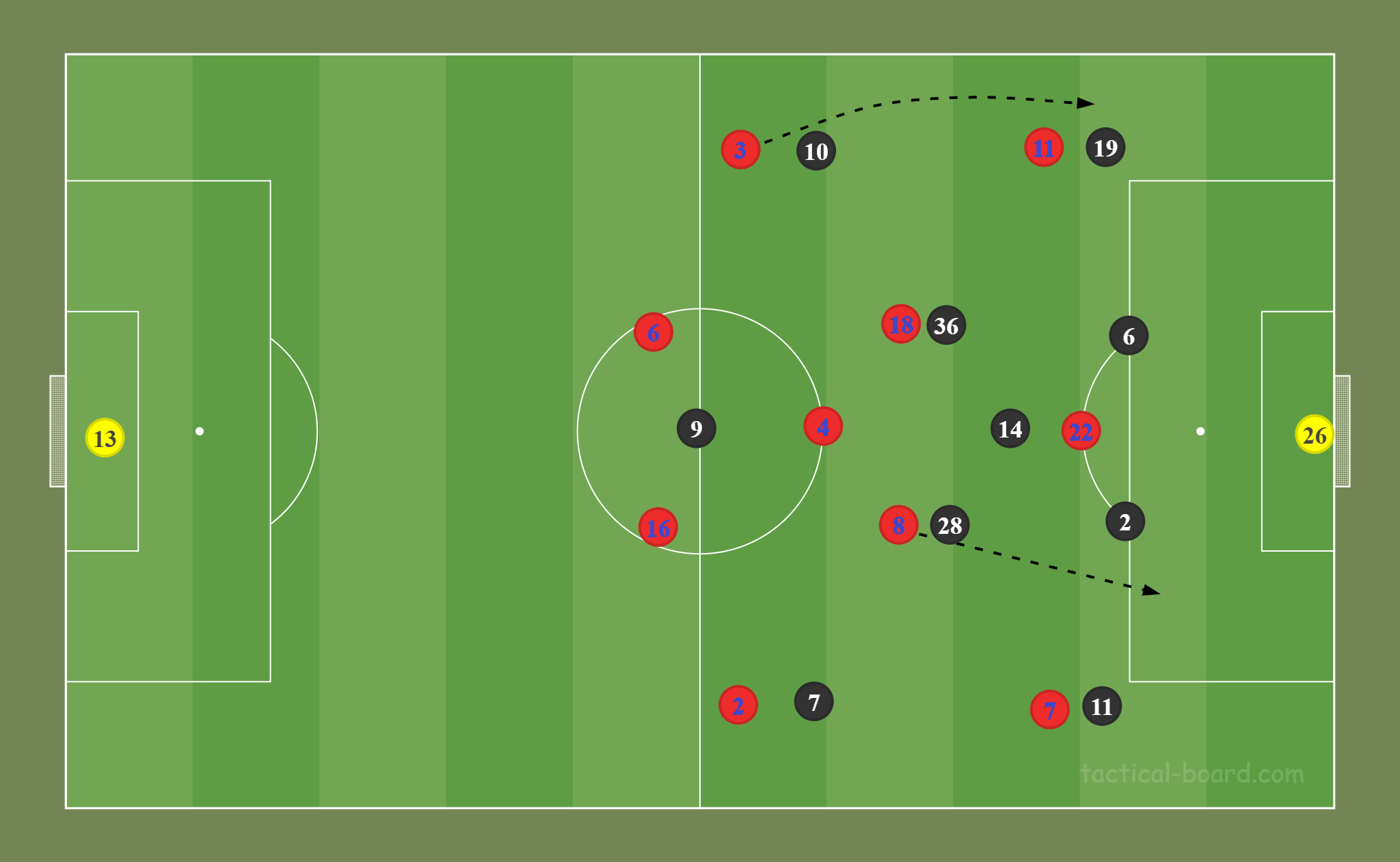
Palace will have the edge in the centre of midfield, behind Christian Benteke or Odsonne Édouard. Conor Gallagher, the club's stand-out player, has a natural channel to run into between the full-back and central defender.
Having battled through a challenging section of the season already, it is time for Crystal Palace to impose themselves on a team at home.